Skip to content



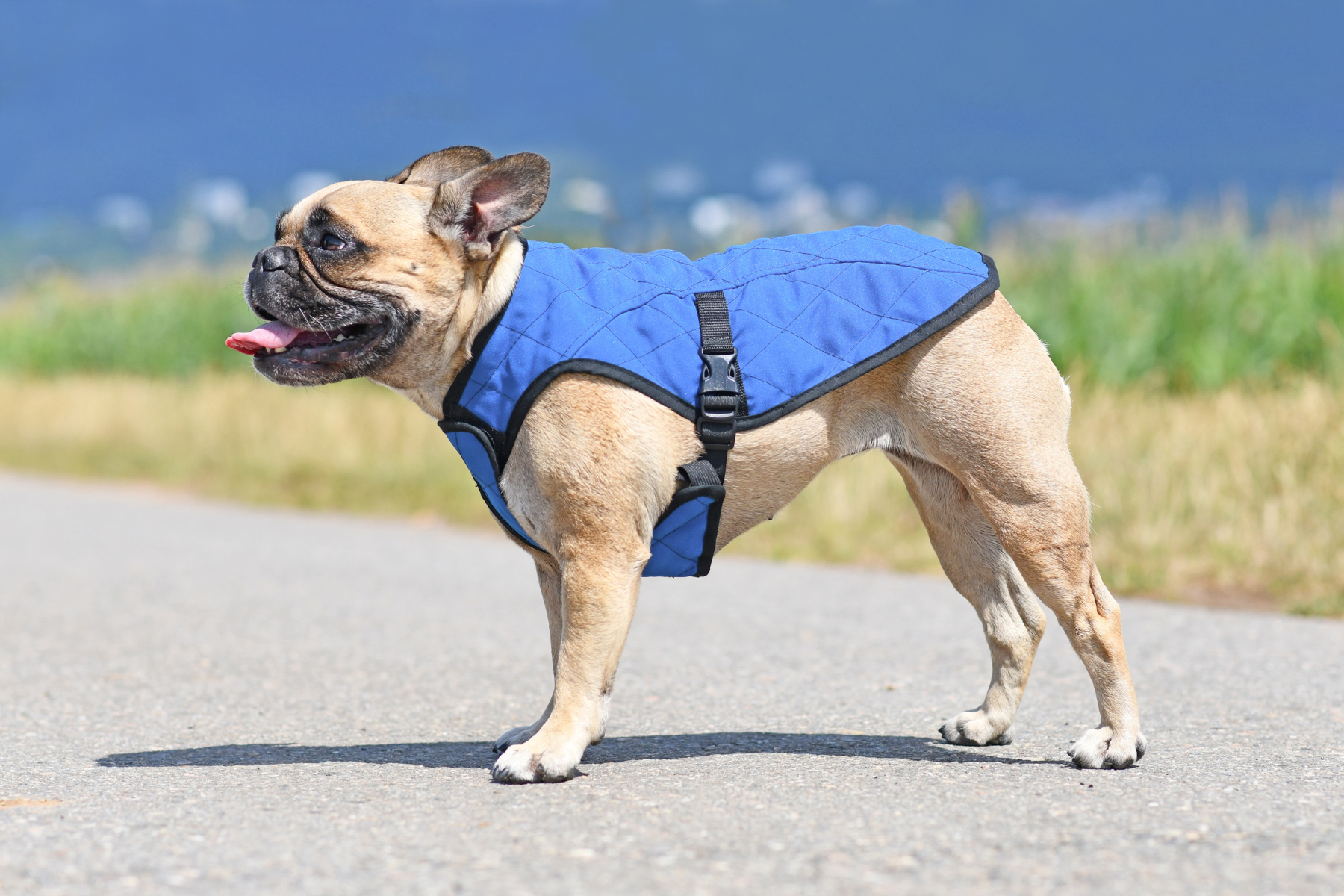
Quick Summary: The best dog cooling vests use advanced evaporative cooling technology to mimic a dog’s natural sweating mechanism, drawing body heat away from the core chest and belly areas. When paired with proper hydration and shade, a high-quality cooling vest can keep your dog’s temperature safe during hot Colorado hikes. Look for lightweight, three-layer vests with a high reflectivity rating to combat intense high-altitude summer sun.
Keeping Your Pup Safe in the Colorado Heat
If you’ve stepped outside recently, you’ve probably already noticed it: the heat is on. While summer doesn’t officially start here in Colorado until June 21st, we’ve effectively already entered the season. Although we’ve already written about general summer safety for your dog and cat and shared our Summer Survival Guide for keeping your canine cool and happy, today we’re going to explore one of the most effective (and most underused) tools in a dog owner’s summer arsenal: the dog cooling vest.
If you’ve ever noticed your dog panting heavily on a walk, struggling to recover after outdoor play, or just looking miserable in the summer heat, a cooling vest might be exactly what they need.
Why Colorado Dogs Need Extra Heat Protection
Colorado’s climate is deceptive. Our low humidity and high altitude make the air feel more comfortable than it actually is, but for dogs, the sun’s intensity at elevation is real and significant. The Front Range regularly sees summer highs in the upper 90s°F, and the UV index frequently hits “very high” to “extreme” territory. Denver and its surrounding areas can experience heat that, combined with direct sun exposure, puts dogs at genuine risk faster than many owners realize.
Dogs can’t sweat through their skin the way humans do. They rely almost entirely on panting to release heat, a process that becomes increasingly inefficient as the ambient temperature rises and hot air offers less cooling effect. Breeds with thick double coats, flat faces (brachycephalic breeds), senior dogs, and overweight dogs are especially vulnerable.
A cooling vest helps bridge the gap between what panting alone can accomplish and what your dog actually needs to stay safe and comfortable.
How Dog Cooling Vests Work
Not all cooling vests use the same mechanism, and understanding the differences helps you choose the right one for your dog’s needs and lifestyle.
Evaporative Cooling Vests
These are the most popular and widely available type. You soak the vest in cool water, wring it out, and put it on your dog. As the water evaporates from the vest’s surface, it draws heat away from your dog’s body — the same basic principle that makes sweating work for humans.
Best for: Active dogs on walks, hikes, or outdoor events; dogs who tolerate water; situations where you have access to water for re-soaking. Evaporative vests work especially well in Colorado’s dry air, where evaporation happens quickly and efficiently.
Key consideration: Evaporative vests lose their effectiveness as they dry out, so in hot, dry weather you’ll need to re-soak every 20-45 minutes depending on conditions.
Phase-Change Cooling Vests
These vests contain inserts filled with a non-toxic phase-change material (PCM) — a substance that absorbs large amounts of heat as it transitions from solid to liquid. The inserts are pre-cooled in a refrigerator or cooler, then inserted into the vest’s pockets.
Best for: Dogs participating in competitions, events, or extended outdoor activities where stopping to re-wet a vest isn’t practical; situations where you have cooler access. Phase-change vests maintain a consistent cooling temperature and last longer between recharges (often 2-4 hours).
Key consideration: These vests are heavier and more expensive than evaporative options. The inserts need to be pre-cooled before use, so they require some advance planning.
Reflective Cooling Vests
These vests use reflective materials to deflect solar radiation, reducing heat gain from direct sun exposure. They may also incorporate moisture-wicking fabrics to aid in evaporative cooling.
Best for: Dogs spending time in direct sunlight; lighter-weight coverage for moderate heat; dogs who dislike the feeling of wet vests.
Key consideration: Reflective vests are generally less effective in extreme heat than evaporative or phase-change options, but they’re lightweight and low-maintenance.
Hybrid Vests
Some vests combine multiple cooling mechanisms, for example: a reflective outer layer with an evaporative inner layer. These offer versatility but tend to be pricier.
The Best Dog Cooling Vests: What to Look For
With dozens of options on the market, evaluating cooling vests by the following criteria will help you find the best fit for your dog.
Fit and Coverage
A cooling vest that doesn’t fit properly won’t cool effectively, and worse, it could restrict movement or cause rubbing and discomfort.
Key fit considerations:
- Chest and belly coverage: The underside of your dog (belly, chest, and inner legs) is where major blood vessels run close to the surface. Vests that cover the belly and chest cool the blood directly, which is far more effective than covering only the back.
- Freedom of movement: A well-fitted vest should allow your dog to move naturally, run, and jump without bunching or shifting.
- Adjustability: Look for adjustable straps or closures that accommodate your dog’s specific body shape. Many breeds have non-standard proportions (deep-chested Greyhounds, barrel-chested Bulldogs, wide-bodied Corgis) that make one-size-fits-all vests problematic.
- Sizing charts: Always measure your dog’s girth and length before purchasing. A vest that’s too loose won’t make consistent contact with the body; one that’s too tight restricts airflow and movement.
Material Quality
For evaporative vests, look for materials that:
- Hold water without becoming excessively heavy
- Allow airflow through and around the vest
- Dry somewhat slowly to prolong cooling duration
- Are easy to clean and quick to dry between uses
Chamois, special mesh fabrics, and purpose-built cooling materials outperform standard cotton, which holds too much water and can actually trap heat.
Ease of Use
You should be able to get the vest on your dog quickly and easily, especially if your dog is excited, wiggly, or heat-stressed.
- Step-in designs are often easier for dogs who dislike things going over their heads.
- Velcro or buckle closures should fasten securely without pinching fur.
- Minimal components reduce the chance of losing pieces (like phase-change inserts) when you’re out and about.
Visibility and Safety Features
If you’re using a cooling vest during walks or outdoor adventures, reflective elements add valuable visibility for early mornings, evenings, or low-light conditions. Some vests also include attachment points for leashes or ID tags, consolidating your dog’s gear.
Durability
A good cooling vest is an investment that should last multiple summers. Look for reinforced stitching, quality hardware, and materials rated to withstand repeated soaking and drying cycles without deteriorating.
Best Dog Cooling Vests by Breed Type
Different dogs have different cooling needs. Here’s how to think about vest selection for common breed categories:
Large and Giant Breeds (Labs, German Shepherds, Golden Retrievers, Great Danes)
Large dogs generate and retain more heat than small dogs, making effective cooling especially important. Look for full-coverage vests with substantial belly and chest panels. Phase-change vests are worth the investment for large breeds who spend extended time outdoors, as the sustained cooling effect matters more for higher heat loads. Ensure sizing options extend to large/extra-large girth measurements.
Double-Coated Breeds (Huskies, Malamutes, Corgis, Bernese Mountain Dogs)
These breeds are particularly prone to overheating because their dense undercoats trap heat effectively, which is great for winter but challenging in summer. Despite the instinct to shave these dogs (which we don’t recommend, as the double coat actually provides insulation against heat as well as cold), a cooling vest over the outer coat can make a significant difference. Evaporative vests with excellent airflow work well for double-coated breeds.
Brachycephalic Breeds (Bulldogs, Pugs, Boxers, French Bulldogs)
Flat-faced dogs are at higher risk of heat-related illness because their compressed airways make panting (their primary cooling mechanism) less efficient. For these breeds, cooling vests aren’t just a comfort accessory; they’re a meaningful safety tool. Prioritize vests with generous belly coverage and choose options that don’t add any restriction around the neck or chest area, which could further compromise breathing.
Small Breeds (Chihuahuas, Yorkies, Shih Tzus, Maltese)
Small dogs may actually tolerate heat better than large breeds in some respects, but sun exposure and hot pavement still pose risks. Lightweight evaporative or reflective vests work well for small dogs. Focus on getting the fit right; small breed bodies vary enormously in proportion, and an ill-fitting vest is more trouble than it’s worth.
Senior Dogs
Older dogs have reduced ability to thermoregulate and may be managing health conditions that increase heat sensitivity (heart disease, kidney disease, respiratory issues). For senior dogs, cooling vests can be an important part of keeping them comfortable and active during summer months without overexertion. Opt for lightweight, easy-to-put-on designs that won’t add stress to already-compromised systems.
How to Use a Dog Cooling Vest Correctly
Even the best cooling vest won’t help if it’s used incorrectly. Here’s how to get the most out of your investment.
For Evaporative Vests:
- Soak thoroughly in cool (not ice-cold) water — extremely cold water can cause vasoconstriction, reducing blood flow to the skin and actually decreasing cooling efficiency.
- Wring out excess water so the vest is damp but not dripping heavily.
- Put it on your dog and make sure it sits snugly against the body, especially across the chest and belly.
- Re-wet regularly — every 20-45 minutes in hot, dry conditions. If the vest feels dry, it’s no longer working.
- Watch for signs of panting, slowing down, or seeking shade — these indicate your dog may need a full break, water, and shade regardless of the vest.
For Phase-Change Vests:
- Pre-cool the inserts in a refrigerator or cooler for the recommended duration (typically 30-60 minutes in the fridge, or shorter in ice).
- Insert the cooling panels into the vest pockets and secure them.
- Monitor the inserts — when they’ve fully melted back to liquid, the cooling effect is spent, and you’ll need fresh inserts or to re-cool them.
- Bring backup inserts on longer outings if possible.
General Tips:
- Introduce the vest gradually if your dog has never worn one. Let them sniff it, reward calmly with treats, and practice short wearing sessions before their first outdoor use.
- Never leave a cooling vest on an unsupervised dog, particularly one using phase-change inserts, as the hard inserts could become a chewing hazard.
- Combine vest use with other cooling strategies — shade, water breaks, and limiting activity during peak heat hours (typically 10 a.m. to 4 p.m.). A cooling vest is a tool, not a substitute for overall heat management.
- Clean the vest regularly according to manufacturer instructions to prevent mildew and bacteria buildup from repeated wetting.
Signs Your Dog Still Needs a Break Despite Wearing a Vest
A cooling vest significantly reduces heat stress, but it doesn’t make dogs invincible in extreme heat. Watch for these signs that your dog needs to stop, rest, and cool down regardless of what they’re wearing:
- Excessive, labored panting that doesn’t slow down
- Slowing pace or refusing to continue walking
- Seeking shade and lying down
- Glazed or glassy eyes
- Excessive drooling
- Bright red or pale gums
- Stumbling or lack of coordination
If you observe any of these signs, move your dog to shade immediately, offer cool (not ice cold) water, and apply cool water to the paws, groin, and armpits. Contact your veterinarian if symptoms don’t quickly improve — heatstroke is a medical emergency.
Cooling Vests vs. Other Cooling Products: How They Compare
Dog cooling vests are one of several products available to help dogs beat the heat. Here’s how they compare to other popular options:
Cooling Mats: Gel-filled or water-activated mats are excellent for indoor lounging and recovery after outdoor activity, but they’re stationary. They complement cooling vests well but don’t replace them for active use.
Cooling Bandanas: Lightweight and easy to use, cooling bandanas provide modest cooling around the neck area where carotid arteries run. They’re a good supplement to a vest but don’t provide the comprehensive coverage that a vest offers.
Cooling Collars: Similar to bandanas, cooling collars target the neck area specifically. They’re easy for dogs to tolerate but limited in their overall effect on body temperature.
Misting Fans: Great for patios, events, and yards where your dog is stationary, but not practical for walks or hikes.
The Verdict: For active summer outings, a good cooling vest is the most effective wearable cooling solution available. Used in combination with cooling mats at home and regular hydration, it provides comprehensive temperature management for dogs who love staying active despite the heat.
Keeping Your Dog Cool at Doggie Dude Ranch This Summer
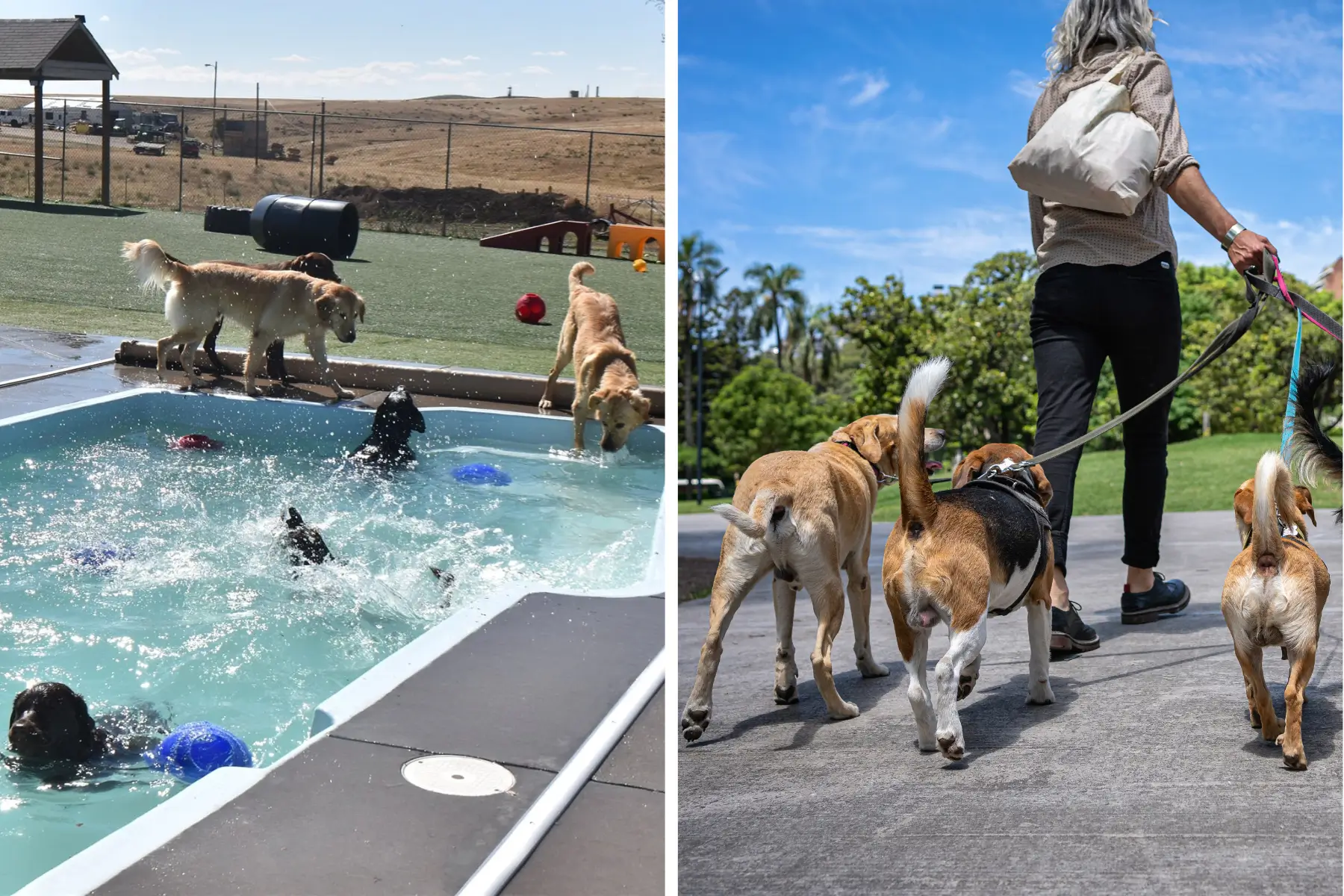
When your dog is boarding or playing with us at Doggie Dude Ranch, summer safety is our top priority. Our facility features shaded outdoor play yards, a full-sized in-ground pool for supervised swim sessions, climate-controlled indoor spaces, and staff trained to recognize and respond to early signs of heat stress.
Whether your pup comes in wearing a cooling vest or not, they’ll be monitored, hydrated, and kept comfortable throughout their stay. We adjust outdoor play schedules to avoid peak heat hours and always have fresh, cool water available in every area of our facility.
If you have questions about how we manage summer heat safety or want to discuss your individual dog’s heat tolerance and needs, our team is always happy to chat. Reach out to us or stop by; we love talking about keeping dogs healthy, happy, and cool all summer long.
Looking for more summer safety tips? Check out our related posts: