Skip to content




Quick Answer: What Should I Do in the First 5 Minutes of a Pet Emergency?
In the first five minutes of a pet emergency, prioritize safety, stay calm, and assess before acting. Move your pet away from any ongoing danger (traffic, water, wildlife), check whether they’re conscious and breathing, control any severe bleeding with direct pressure, and avoid actions that could worsen the injury, such as applying ice to a snake bite or attempting to induce vomiting without veterinary guidance. Call your veterinarian or the nearest emergency animal hospital while you work, since many situations benefit from advance notice so the clinic can prepare. Above all, resist the urge to rush a full home treatment. Your job in these first minutes is stabilization and safe transport, not a cure.
The Essence of the First Five Minutes
Every summer, Colorado pet owners head into the mountains, foothills, and open spaces with their dogs, and cats who roam outdoors encounter their own share of backyard hazards. Most outings end without incident. But when something does go wrong—a snake strike on a trail, a wasp nest disturbed mid-hike, a deep cut from broken glass at the campsite—what you do in the first few minutes can meaningfully affect the outcome.
This isn’t about replacing veterinary care. It’s about the gap between “something just happened” and “we’re in the car heading to help.” That gap is where panic tends to take over, and where well-intentioned but incorrect actions (like applying ice to a venomous bite or trying to make a pet vomit) can sometimes do more harm than good.
This guide focuses specifically on that critical early window and on scenarios especially relevant to Colorado’s outdoor lifestyle: venomous snake bites, insect stings, and the general triage mindset that applies to almost any emergency. For deeper detail on related skills, including checking vital signs, wound cleaning and bandaging, building a first aid kit, and handling poisoning, our sister company Dingo’s Natural Pet has published a comprehensive first aid guide worth bookmarking alongside this one.
The First 5 Minutes: A Universal Response Framework
Regardless of what type of emergency you’re facing, the same basic sequence applies in those first critical minutes.
Minute 1: Ensure Safety—Yours and Theirs
Before you touch your pet, look around. Is there ongoing danger? A snake still nearby, traffic on a road, deep or moving water, or another aggressive animal? Move your pet to safety first, even if that means a brief delay in examining them. You cannot help your pet if you become injured yourself.
If your pet is in pain, understand that even the gentlest animal may bite or scratch defensively. Approach slowly, speak in a calm, low voice, and consider a makeshift muzzle for dogs (a strip of soft cloth or a leash looped gently around the muzzle) if you need to examine or move a painful area, unless your pet is vomiting, having difficulty breathing, or showing signs of airway distress, in which case never muzzle them.
Minute 2: Assess Consciousness and Breathing
Quickly determine whether your pet is alert, breathing normally, and responsive to your voice or touch. Look for chest movement, check gum color if you can safely do so (pink is normal; pale, blue, or white gums indicate a serious problem), and note whether your pet can stand or move their limbs normally.
Minute 3: Control Any Severe Bleeding
If there’s active, significant bleeding, apply firm, direct pressure with a clean cloth, gauze, or even a shirt if that’s what’s available. Maintain steady pressure rather than repeatedly checking the wound, which disrupts clot formation. Elevate the injured area above heart level only if there’s no suspected fracture and doing so is safe for the specific situation.
Minute 4: Avoid Common Mistakes
Certain instincts, though well-meaning, can worsen specific emergencies. We’ll cover situation-specific guidance below, but as a general rule: don’t apply ice directly to bites or stings, don’t give human medications without explicit veterinary instruction, and don’t attempt to induce vomiting unless a veterinarian or poison control specifically tells you to.
Minute 5: Call Ahead and Begin Transport
Call your veterinarian, an emergency animal hospital, or a pet poison control line while you’re finishing initial stabilization. Describe the situation clearly and follow any instructions given. Calling ahead allows the clinic to prepare and often provides you with guidance for the drive over. Move your pet using a stable surface if a back or spinal injury is possible: a flat board, a sturdy blanket used as a sling, or a car seat cover can work if a proper stretcher isn’t available.
Rattlesnake Bites: A Colorado-Specific Emergency
Colorado is home to three rattlesnake species—the prairie rattlesnake, the Western (also called midget-faded) rattlesnake, and the massasauga—and treatment guidance is the same across all three. Dogs are particularly vulnerable because they often explore with their nose and paws first, leading to bites on the face, muzzle, or front legs.
What to Do
Move away from the snake immediately. Get your dog to a safe distance before doing anything else. Rattlesnakes generally prefer to avoid confrontation, but a startled or cornered snake may strike again.
Keep your dog as calm and still as possible. Elevated heart rate speeds venom circulation through the body, so carrying a small dog or limiting a large dog’s movement (rather than letting them walk or run) is genuinely important, not just a comfort measure.
Keep the bite location at or below heart level. This is the opposite of what many people assume. Raising a bitten limb above the heart can accelerate venom spreading into the body, while keeping it level or lower slows that process, even though it may increase local swelling.
Rinse the bite area with water if you can do so without delaying transport. This can help remove residual venom from the skin surface.
Get to a veterinarian immediately, and call ahead if possible. Antivenom is typically the frontline treatment for rattlesnake bites in Colorado, and clinics can prepare in advance if they know you’re coming.
What Not to Do
- Do not apply ice or cold packs to the bite—this provides no proven benefit and can worsen tissue damage
- Do not attempt to suck out venom with your mouth
- Do not apply a tight tourniquet
- Do not waste time trying to identify, kill, or capture the snake
- Do not let your dog exert itself by walking, running, or continuing the hike
Prevention Note
Keeping dogs leashed on trails through rattlesnake habitat significantly reduces the chance of an encounter, since off-leash dogs are far more likely to investigate or startle a snake than one walking calmly beside you. If you choose to walk your dog off-leash, check out our post on off-leash trail recall for tips on how to ensure your dog stays close by.
Bee Stings, Wasp Stings, and Insect Bites
Both dogs and cats commonly encounter bees and wasps during Colorado summers, whether chasing them in the backyard or brushing against a nest on a trail. Most stings are uncomfortable but not dangerous; the real concern is identifying the minority of cases that escalate into a serious allergic reaction.
What to Do
Check for a visible stinger. Only honeybees leave a stinger behind, and if you see one, remove it quickly by scraping it out sideways with a stiff, flat object like a credit card. Speed matters more than technique here—getting the stinger out fast reduces the amount of venom released, so don’t worry excessively about using tweezers if that’s the only option available.
Apply a cold compress. Wrap ice or a cold pack in a cloth and hold it against the sting site for 10 to 15 minutes to reduce swelling and discomfort.
Watch closely for the next 24 hours, even if your pet seems fine initially. Allergic reactions in dogs and cats commonly appear within 20 minutes of a sting but can be delayed for hours.
Signs That Require Immediate Veterinary Care
A sting anywhere on the face, mouth, or throat carries elevated risk regardless of allergy history, since localized swelling in these areas can obstruct breathing even without a true allergic reaction. Beyond location, watch for:
- Significant swelling beyond the immediate sting site, especially around the face or neck
- Difficulty breathing or unusual breathing sounds
- Hives or widespread bumps under the skin
- Vomiting or unusually soft stool
- Weakness, stumbling, or disorientation
- Pale or white gums
Any of these signs warrants an immediate call to your veterinarian or the nearest emergency animal hospital. Don’t wait to see if symptoms resolve on their own.
A Note on Cats
Cats often hide pain and discomfort more effectively than dogs, so a cat who was stung may simply retreat and seem “off” rather than showing an obvious reaction. If you suspect your cat encountered a bee or wasp but didn’t witness it directly, monitor closely for the swelling and behavioral signs described above.
Choking
Choking is a true emergency requiring immediate action, and because our sister site covers hands-on choking response techniques in detail, we’ll keep this section focused on recognition. A choking pet may paw frantically at their mouth or face, make exaggerated retching or gagging sounds without producing anything, or show visible distress breathing. If you can see the object and can safely reach it, remove it. If not, a modified Heimlich-style maneuver may be necessary. For full step-by-step guidance on performing this safely for pets of different sizes, see Dingo’s Natural Pet’s first aid guide.
Cuts and Lacerations
Active pets exploring trails, campsites, and backyards inevitably encounter sharp rocks, broken glass, or thorny brush. For minor cuts, the first five minutes are about controlling bleeding with direct pressure and preventing your pet from licking or further contaminating the wound until you can clean and bandage it properly. Deep wounds, those with heavy or pulsing bleeding, or any laceration near the eyes or throat require immediate veterinary attention rather than home treatment. For complete wound-cleaning and bandaging technique, our sister site’s guide walks through the process step by step.
Heatstroke
Given Colorado’s intense summer sun and our mile-high elevation, heatstroke deserves a quick mention here even though detailed treatment steps are covered elsewhere. In the first five minutes of suspected heatstroke (excessive panting, drooling, weakness, or collapse after heat exposure), move your pet to shade or air conditioning immediately, apply cool (not ice-cold) water to their paws and belly, and head to a veterinarian right away, even if your pet seems to be recovering. Heatstroke can cause internal damage that isn’t immediately visible. You can learn more about keeping your pet safe from heatstroke here.
What to Keep in Your Vehicle for Trail and Camping Trips
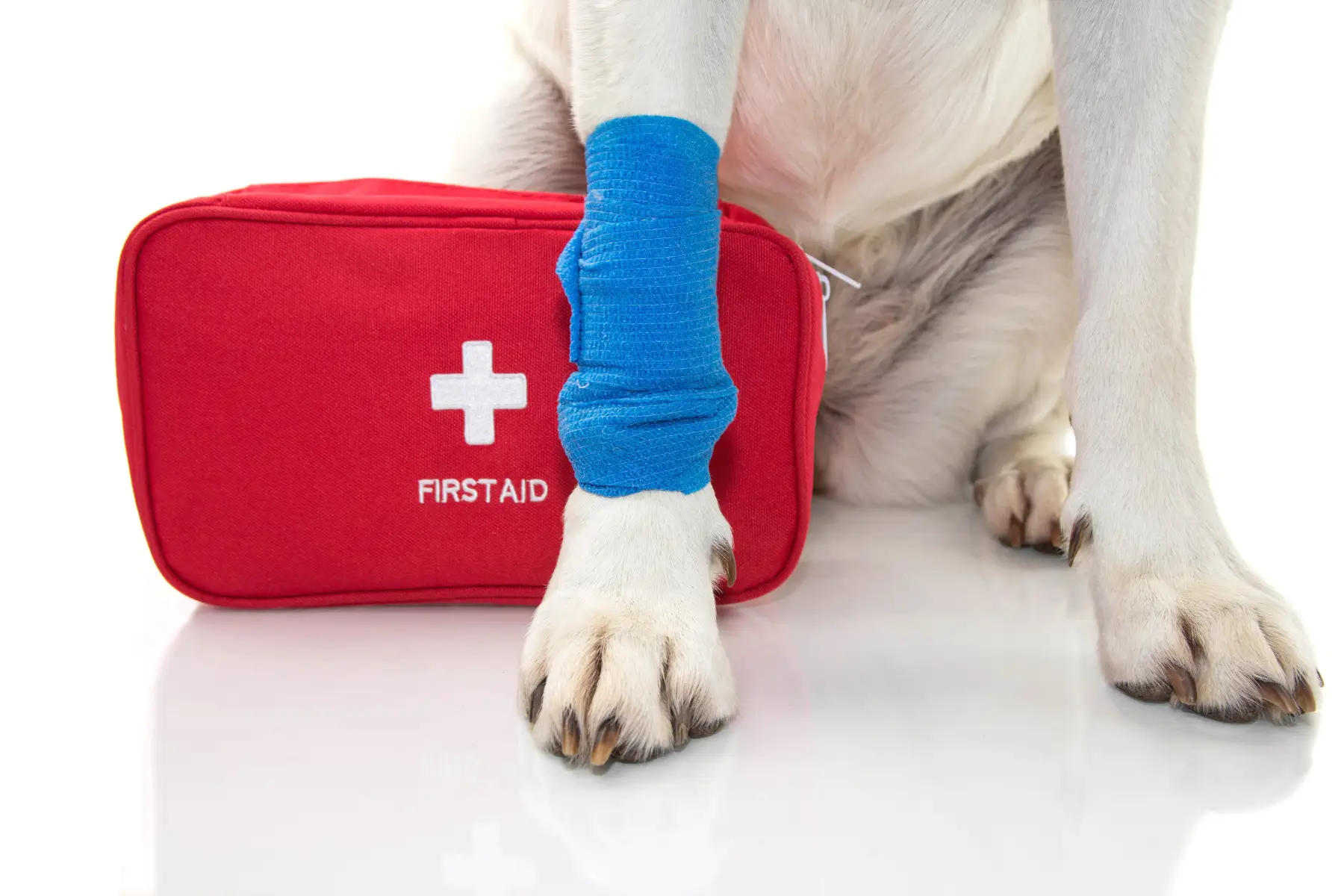
Given how often Colorado summer emergencies happen away from home, keeping a compact first aid kit in your car or backpack means you’re never caught without basic supplies. At minimum, consider packing gauze and self-adhesive bandage wrap, a stiff card for stinger removal, a small bottle of clean water for rinsing wounds, a soft muzzle or spare leash, and your veterinarian’s phone number along with the nearest emergency animal hospital’s contact information saved in your phone before you head out.
When in Doubt, Call
If you’re ever uncertain whether a situation warrants a trip to the vet, call and describe what happened. Veterinary staff would far rather field a call about a situation that turns out to be minor than have an owner wait too long on something serious. Trust your instincts: if something feels wrong with your pet, it’s worth checking out.
Being Prepared Is Part of Responsible Pet Ownership
Colorado’s outdoor lifestyle is one of the best parts of living here, and most hikes, camping trips, and backyard summer days pass without any emergency at all. But knowing exactly what to do in those first critical minutes—staying calm, assessing safely, avoiding common mistakes, and getting professional help quickly—can make a genuine difference when something does go wrong.
At Doggie Dude Ranch and the O’Cat Corral, we care about your pet’s safety whether they’re boarding with us or exploring the trails with you. For a broader foundation in pet first aid skills, including vital sign checks, building a first aid kit, and detailed wound and poisoning response, visit our sister company’s guide at Dingo’s Natural Pet.
Questions about pet safety or looking for a place where your dog or cat is cared for by an experienced, attentive team? Contact Doggie Dude Ranch and the O’Cat Corral in Watkins, Colorado.