Skip to content



Quick Summary: Denver’s unique geography creates a “bowl effect” along the Foothills that traps ground-level ozone and fine particulate matter during late August and September. Because dogs and cats have higher respiratory rates than humans and exercise closer to the ground, poor air quality days (AQI over 100) pose severe risks for canine lung health and can trigger feline asthma. Shifting outdoor activities to early morning hours and utilizing climate-controlled, air-filtered environments during peak afternoon ozone alerts is critical for protecting your pet’s respiratory system.
Step outside on a late-August afternoon in Denver, and you’ll probably notice it before you think much about it: a soft brownish haze sitting along the horizon, the mountains looking a little less crisp than usual. Most people glance at it, maybe mutter something about wildfire smoke, and go about their day. Dogs and cats don’t get that luxury. They’re breathing faster, closer to the ground, and often working harder than we realize, right in the layer of air where the problem is worst.
This is the part of Colorado living that doesn’t show up in the postcards. Every late summer, as temperatures climb and the Front Range settles into its dry, hazy stretch, our pets quietly absorb more of that air than we do.
The Geography Working Against Us
Denver sits in a kind of natural bowl, with the Rocky Mountains rising to the west and flatter terrain extending east. That shape is beautiful, but it’s also a trap—for air, at least. Pollution generated along the urban corridor, from Castle Rock up through Denver and Aurora, doesn’t disperse easily. It settles into the bowl, gets baked by sunlight, and turns into ground-level ozone. Add in smoke drifting in from regional wildfires, and you’ve got the recipe for the Air Quality Action Days the Colorado Department of Public Health and Environment issues with increasing regularity each August and September.
For people, this mostly means hazy views and maybe a scratchy throat on the worst days. For pets, the stakes are higher, and the reasons come down to basic biology.
Three Reasons Your Pet Feels It More Than You Do
A resting dog breathes somewhere between 15 and 30 times a minute. Get them moving—chasing a ball, trotting on a walk, working through a hike—and that rate climbs fast. Every one of those extra breaths pulls more polluted air deep into the lungs. It’s simple math: more breathing means more exposure.
Then there’s proximity. Ozone and fine particulate matter don’t hang uniformly through the atmosphere; they concentrate near the ground, exactly where a dog’s nose lives and where a cat exploring a window screen or catio takes in the outside air. What registers as mildly hazy to a person standing upright is a much more concentrated experience for an animal moving through the first few feet of atmosphere.
And then there’s the altitude problem, which is a uniquely Front Range issue. Denver’s thin air already asks more of a pet’s lungs during exercise than sea-level air would. Layer poor air quality on top of that altitude demand, and the efficiency of oxygen exchange drops noticeably. It’s not two separate stressors; it’s one compounding one.
Not Every Pet Faces the Same Risk
Some animals can shrug off a moderately hazy day without much issue. Others can’t, and it’s important to know which category your pet falls into.
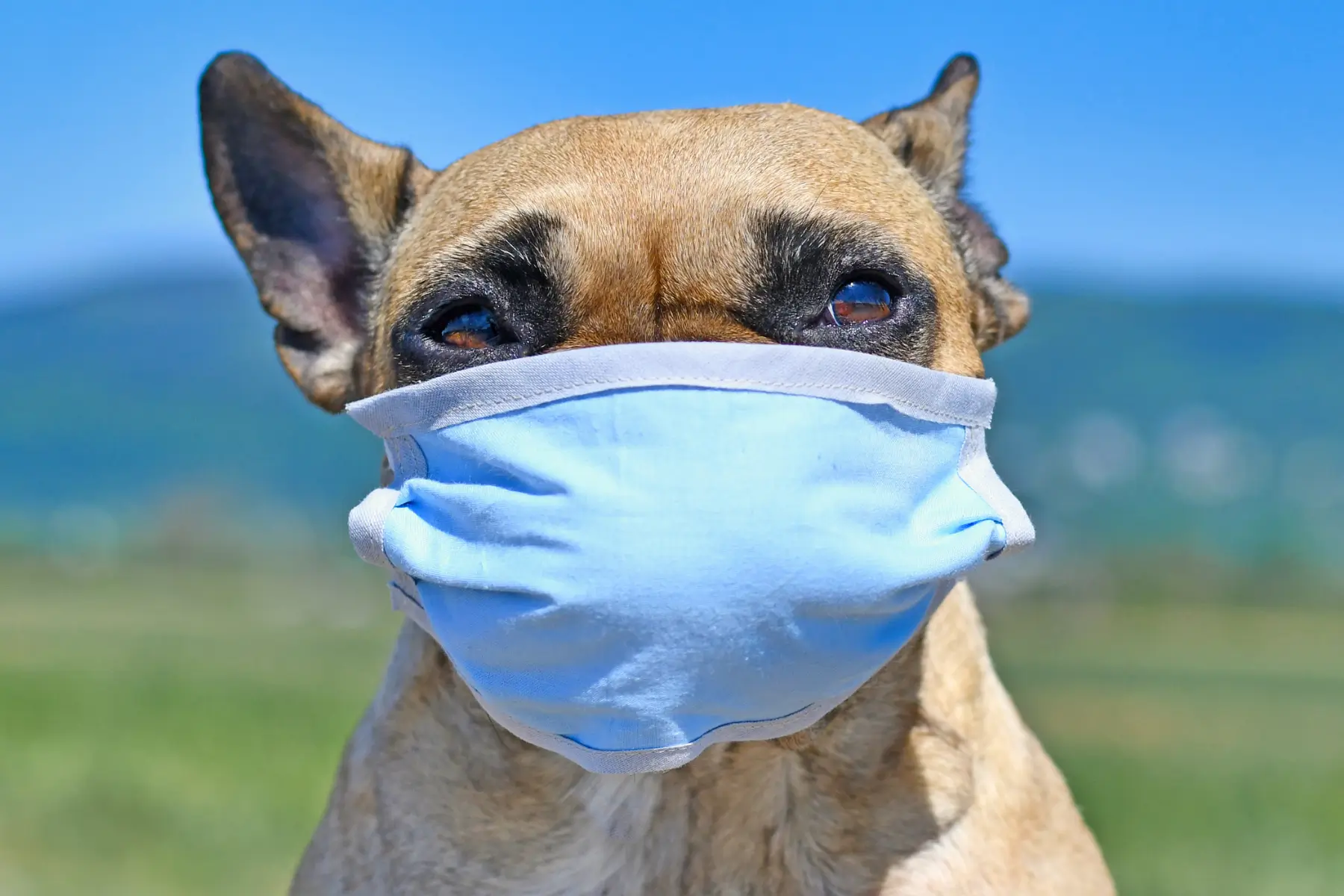
Flat-faced breeds such as French Bulldogs, Pugs, Boxers, and Boston Terriers already work harder to breathe under normal circumstances because of their airway structure. Add ozone-related inflammation to that baseline, and breathing becomes noticeably more labored, even during light activity.
Senior pets and those with existing heart or respiratory conditions also deserve extra caution. A dog with chronic bronchitis or tracheal collapse, or a cat with heart disease, doesn’t have much reserve capacity to absorb additional respiratory stress.
Cats, in particular, face a risk that’s easy to overlook simply because they’re not out on trails and sidewalks the way dogs are. Feline lower airway disease, commonly called feline asthma, is frequently triggered by environmental irritants. The Cornell Feline Health Center points to airborne pollutants as a common culprit behind flare-ups, which means even a cat who never leaves the house can be affected by what’s drifting in through open windows or ventilation.
High-energy dogs round out the list: trail runners, working breeds, agility dogs, any dog who pants heavily during real exertion. Heavy panting is, in effect, heavy inhalation, and that means more pollutant exposure per minute of activity.
Reading the Numbers Before You Head Out the Door
Air Quality Index readings aren’t just background noise for meteorologists; they’re genuinely useful for deciding what your pet’s day should look like. AirNow.gov tracks live regional data, and it’s worth a quick check before any serious outdoor activity during late summer.
Below 50 is considered good air quality, and it’s a green light for essentially anything: dog parks, high-altitude trails, a full afternoon outside. Between 51 and 100, most pets are still fine, though it’s worth easing up on strenuous exercise for seniors and brachycephalic breeds, especially if the heat is also climbing. Once the index crosses into the 101 to 150 range (unhealthy for sensitive groups), it’s time to shorten outdoor sessions and move play indoors for anyone in a higher-risk category. Above 150, the safest approach is quick, low-key potty breaks only, with windows closed at home to keep outdoor air from settling indoors.
Adjusting the Day Without Sacrificing the Fun
None of this means canceling exercise altogether. Rather, it means shifting when and how it happens.
Ozone forms through a sunlight-driven chemical reaction, which is why it tends to peak in the late afternoon and early evening rather than first thing in the morning. Moving walks, fetch sessions, and trail time to early morning hours, before the day heats up and the ozone builds, is one of the simplest and most effective adjustments a pet owner can make during this season.
It’s also worth paying attention to what pets track back inside. Fine particulate matter from wildfire smoke settles into fur and paw pads during even brief time outside, and a quick wipe-down with a damp cloth when you come back in helps keep your pet from ingesting trapped particles later while grooming.
On the days when outdoor time genuinely needs to be limited, mental stimulation can fill the gap. Snuffle mats, puzzle feeders, and short training sessions inside an air-conditioned space give dogs a meaningful outlet for energy without asking their lungs to work against bad air.
What This Looks Like at Doggie Dude Ranch and the O’Cat Corral
Late summer in Colorado brings a specific kind of restlessness—pets who are used to plenty of outdoor time suddenly cooped up more than usual, right as everyone’s routines are already shifting with the start of the school year. We pay attention to this pattern every year, and it shapes how our indoor spaces are built and maintained.
Rather than treating clean air as an occasional adjustment, we’ve built it into the facility itself. Air filtration systems run across our indoor spaces, so the environment dogs and cats rest and play in stays consistently clean rather than depending on any single day’s outdoor conditions. That matters most on the hazy days, but it’s working in the background every day, not just when the sky looks a little brown along the horizon.
Cleanliness on the ground matters just as much as what’s filtering through the air. Our kennels are vacuumed and mopped daily, which keeps dust, dander, and tracked-in particulate matter from settling and recirculating in the spaces where pets spend their downtime. It’s a simple routine, but it adds up over the course of a stay, especially for pets who are already more sensitive to what they’re breathing.
Cats staying with us at the O’Cat Corral enjoy quiet, climate-controlled suites with climbing structures and interactive toys, all within that same filtered indoor environment, so their care doesn’t hinge on outdoor conditions to begin with. For dogs, that clean, filtered indoor space gives us somewhere reliable to shift rest and play when the air outside isn’t cooperating, without pets losing out on comfort or stimulation in the process.
Air quality isn’t the most obvious thing to think about when planning a dog’s afternoon, but along the Front Range, it deserves a spot on the list right next to heat and altitude. A little attention to the AQI, a shifted walk time, and a wipe-down at the door go a long way toward keeping your pet’s lungs as healthy as the rest of them through the hazy stretch of late summer.
Schedule a visit at Doggie Dude Ranch and the O’Cat Corral to get a first-hand look at our clean, air-filtered indoor spaces, and while you’re at it, a glimpse of our spacious outdoor play areas too.